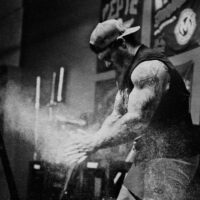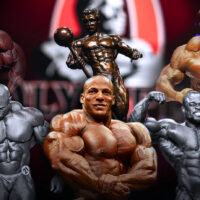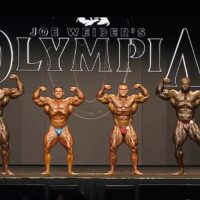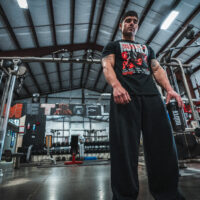

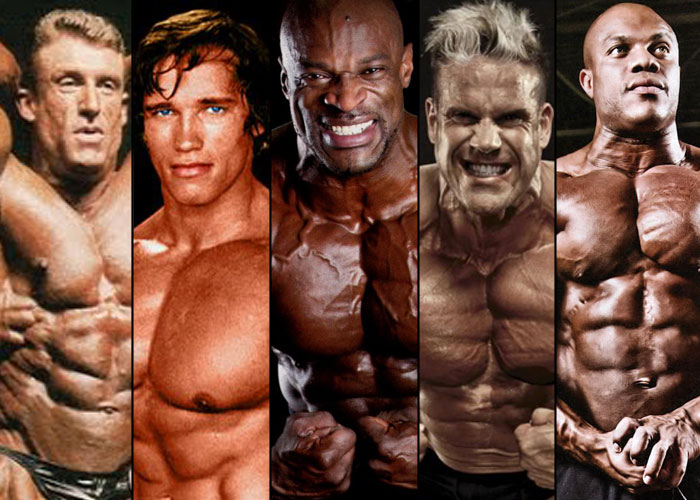

If you look at the mass monsters walking the Mr. Olympia stage today – those of us that remember what competitors looked like in the 80’s and 90’s are left scratching our heads. Aesthetics and conditioning have given way to mass. So… wtf happened? Let’s get into this…
Somewhere along the way – we lost the plot.
Bodybuilding used to be a study in proportion…
A sport where the guy with the smaller waist and the wider back beat the guy who simply ate more and grew bigger.
Where a v-taper meant something, where conditioning was king and where the judges – and the fans alike – rewarded the physique that looked like it was carved…
Not just built.
Somewhere between then and now – “more” became the entire argument.
So let’s actually ask the question nobody wants to answer out loud:
What the actual F**K happened to bodybuilding?
The Biggest Wasn’t Always the Best
Go back and watch footage from the 1980s and you’ll notice something that feels almost foreign now…
Restraint.
Not a lack of size – these guys were still freaks of nature for their era – but a version of size that answered to symmetry first.
Lee Haney won eight straight Mr. Olympia titles from 1984 to 1991 – a streak that still ties the all-time record.
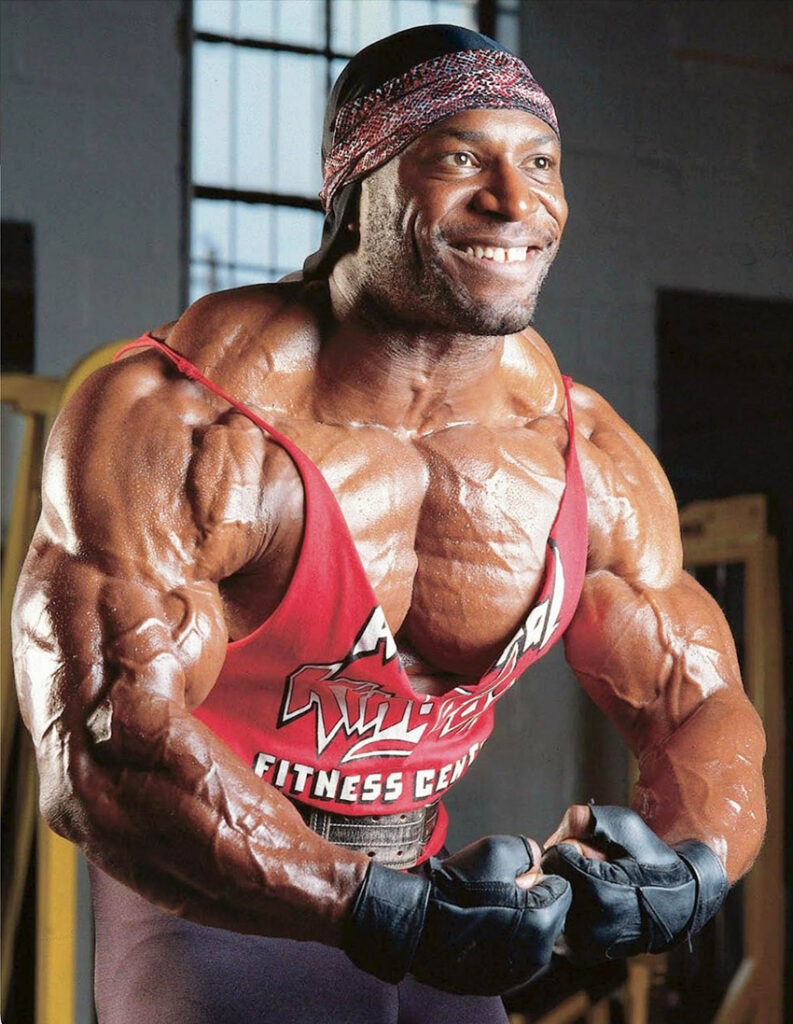
What made Haney dominant wasn’t that he simply outweighed everyone else on stage – it was that he combined serious mass with proportion nobody else could touch.
He said it himself: “train to stimulate, not annihilate”.
That’s not a mass-monster mantra…
That’s a bodybuilder’s mantra.
Rich Gaspari, “The Dragon Slayer,” spent the back half of the 80s finishing runner-up to Haney three years straight – and he did it by pushing conditioning to a level nobody had seen…
He was reportedly the first guy to bring striations to his glutes on stage.
That’s not a story about size – that’s a story about detail.
And then there’s Bob Paris – who Flex Magazine would later call the most aesthetic athlete in the history of the sport.
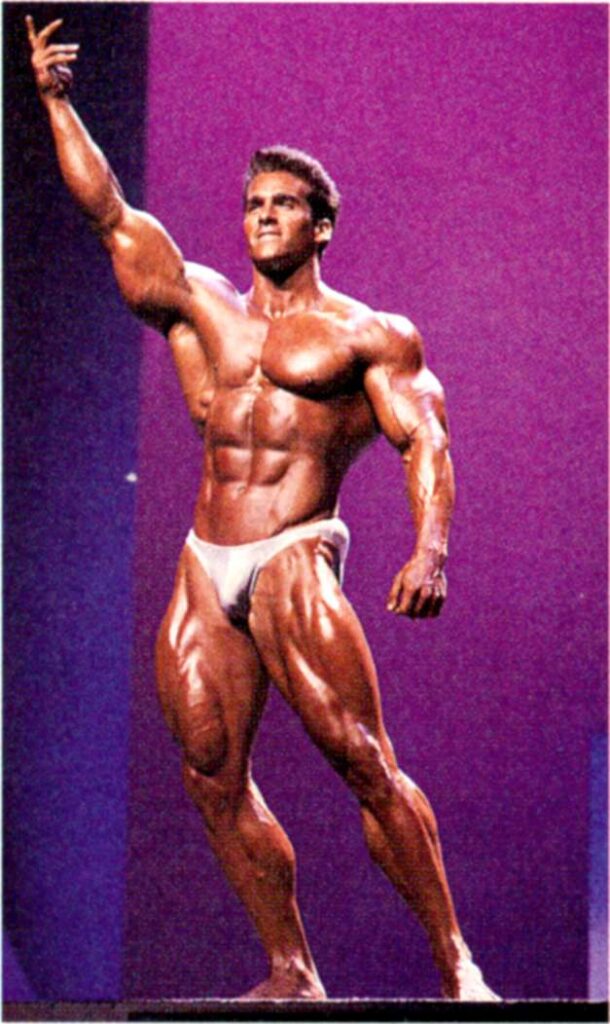
Paris never chased being the biggest guy in any lineup…
He chased lines, proportion and an almost artistic sense of what a body could look like on stage.
That was a legitimate path to greatness in the 80s.
So, ask yourself honestly – is it still?
Bigger But Still BETTER
The 90s get remembered as the start of the shift toward size and that’s fair – but it’s worth pointing out that some of the most beloved physiques of the decade were still built on aesthetics – not just tonnage.
Kevin Levrone competed at 110-115 kilos with a physique that was as much about lines as it was about mass – a 24-inch arm and a 57-inch chest, sure – but also a physique fans still call one of the best ever assembled.
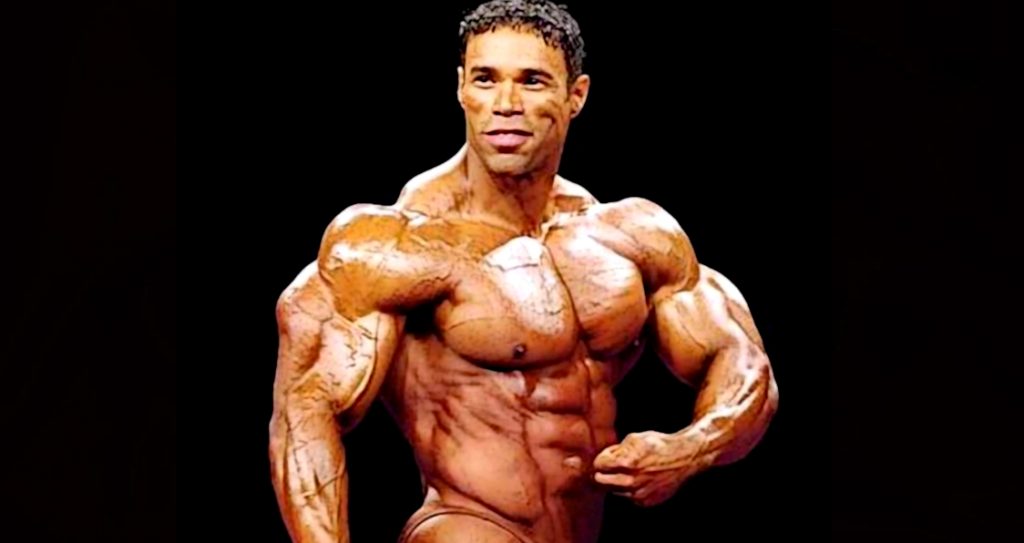
He racked up four second-place Olympia finishes across the decade and never took home the Sandow – which is exactly why people still call him one of the greatest to never win it.
Flex Wheeler earned that same “uncrowned Mr. Olympia” label – and his nickname tells you everything: the Sultan of Symmetry.
Wheeler built a career – and a legacy that still gets talked about today – on lines and proportion so clean that judges and fans alike still argue he should’ve won more than his fair share of Sandows.
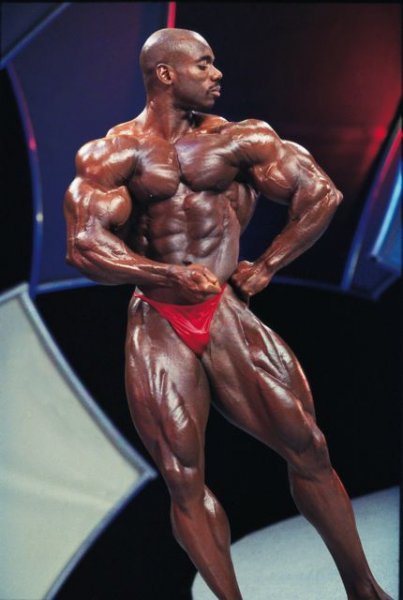
Levrone and Wheeler were proof that even as the sport’s ceiling for size kept rising through the 90s…
The guys people fell in love with were still the ones who looked good, not just big.
When Did The Sport Flip?
Somewhere after that though…
The math flipped.
Mass stopped being one column on the scorecard and became the scorecard.
Today’s Open class is a different sport – genuinely different – not just an evolution.
These are athletes carrying more raw size than any era before them – and it’s not really a debate that a lot of it has come at the expense of the very things that made the golden era physiques so compelling…
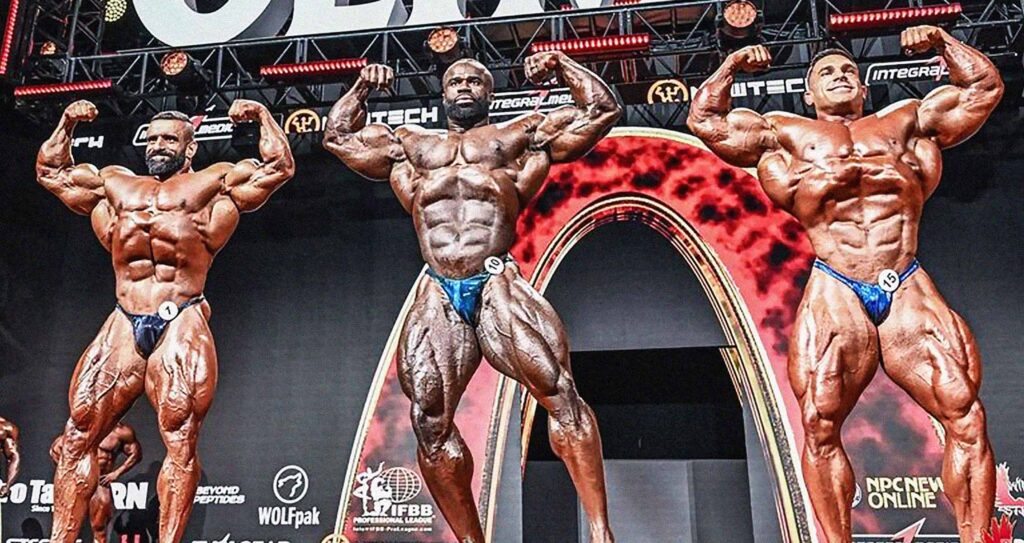
Such as waist-to-shoulder ratio, conditioning you can see from the back of the auditorium and a stage presence built on lines instead of just circumference or funky posing routine.
Now, don’t get me wrong…
None of this is a knock on the work ethic or the genetics it takes to get to that level. That part’s never been in question.
The question is what the sport started rewarding – and for the past few decades – it seems like “more” was the only answer that mattered.
At Least Classic Is Keeping The Sport Alive
This is why Classic Physique matters soooo much…
And why it’s not an overstatement to say it’s kept bodybuilding – the version people fell in love with in the first place – alive.
The division launched at the 2016 Olympia – explicitly built around height-and-weight class limits – as a direct answer to the mass-at-all-costs direction the Open class had taken.
It was the sport building a lane back to proportion, on purpose.
Chris Bumstead took that lane and turned it into a phenomenon.
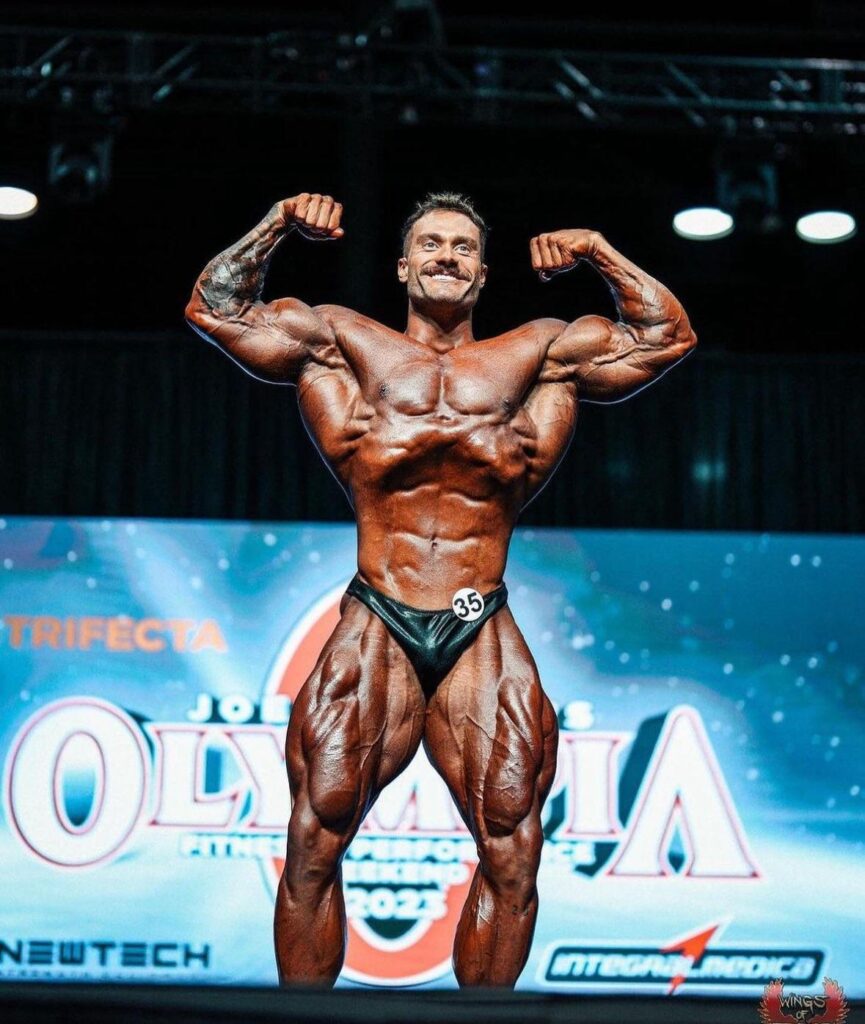
Six straight Classic Physique Olympia titles from 2019 to 2024 – the longest win streak in the division’s history – and along the way he did something bigger than the trophy…
He made an entire generation care about symmetry again.
Ronnie Coleman, a man who built his own legacy on a very different kind of physique, called Bumstead the greatest Classic bodybuilder of all time.
That’s the sport’s biggest mass-era champion tipping his cap to the guy carrying the aesthetics torch.
And the torch didn’t go out when Bumstead retired.
Ramon Dino spent years as the guy finishing second to Bumstead – runner-up in 2022 and again in 2023 – before finally taking the title in 2025 and becoming the first Brazilian man ever crowned an Olympia champion.
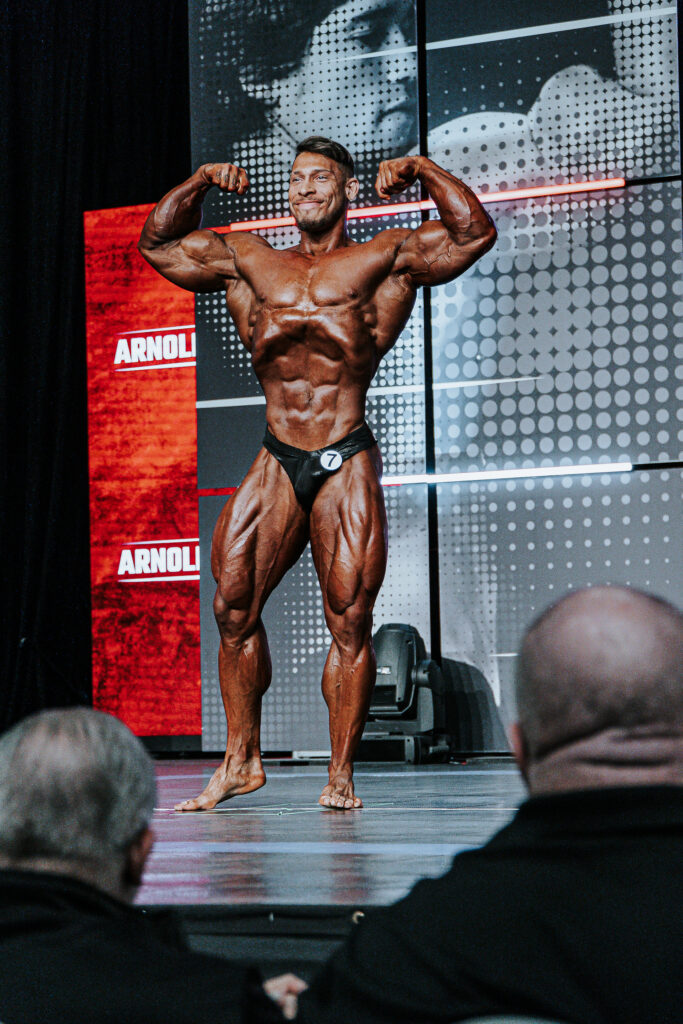
That’s not a consolation story…
That’s the next chapter of a division that’s proven it has real staying power, real stars, and a real audience.
So…
WTF Happened To Bodybuilding?
Here’s the honest answer: nothing happened to it.
It’s still here…
It just split into two different conversations happening on the same stage.
The Open class chased size because size photographs, size sells tickets and size is the easiest thing to measure when two guys are standing next to each other.
Classic Physique chased what the sport used to be about before anyone had to ask the question – proportion, conditioning and a body that looks like it was carved from stone instead of clay.
Bodybuilding didn’t lose its way…
It just needed a division to remind it where the way was in the first place.
And judging by how fans have shown up for Bumstead, for Dino and for everything Classic Physique has built in less than a decade…
It’s good to see we’re not the only ones who noticed.
“Bodybuilding is supposed to be something beautiful.” – Kevin Levrone
Editor’s note: Whether you’re chasing proportion like Haney, pushing limits in the Open class or just trying to add a little muscle before the Holidays – the principle hasn’t changed since the 80s – the work has to be real. Nutrex has been fueling that work for over two decades – and we can help YOU too. Want to follow in the footsteps of the greats? We’ve got your back. Shop the full Nutrex lineup!